---
title: How to Get the Most Out of Your Outdoor Kitchen in Minnesota
description: Get outdoor kitchen layout tips, cost ranges, and Minnesota-specific design advice from Outdoor Innovations. Build a kitchen made for Twin Cities weather.
image: https://outdoorinnovations.com/hubfs/Website/Outdoor%20Kitchens%20and%20Livingrooms/baebff75016e4fcdbc2d440dab08044f.jpg
---
[Skip to main content](https://outdoorinnovations.com/blog/how-to-get-the-most-out-of-your-minnesota-outdoor-kitchen#main-content)
- [About](https://outdoorinnovations.com/about-us)
- [Latest News](https://outdoorinnovations.com/blog)
- [651-983-1976](tel:6519831976)
[ ](https://outdoorinnovations.com)
- Show submenu for Pools Pools
- [In-Ground Pools](https://outdoorinnovations.com/swimming-pools)
- [Pool Houses](https://outdoorinnovations.com/pool-houses)
- Show submenu for Outdoor Living Outdoor Living
- [Kitchen & Bars](https://outdoorinnovations.com/outdoor-kitchen)
- [Outdoor Living Rooms](https://outdoorinnovations.com/outdoor-living-rooms)
- [Decks & Porches](https://outdoorinnovations.com/decks-porches)
- [Patios](https://outdoorinnovations.com/patios)
- [Outdoor Structures](https://outdoorinnovations.com/pergolas-gazebos)
- Show submenu for Landscaping Landscaping
- [Pavers](https://outdoorinnovations.com/pavers)
- [Retaining Walls](https://outdoorinnovations.com/retaining-walls)
- [Fire & Water Features](https://outdoorinnovations.com/fire-and-water-features)
- [Septic Systems](https://outdoorinnovations.com/septic-systems-management)
- Show submenu for Gallery Gallery
- [Pools](https://outdoorinnovations.com/gallery#pools)
- [Outdoor Living Rooms](https://outdoorinnovations.com/gallery#outdoor-living)
- [Outdoor Kitchens & Bars](https://outdoorinnovations.com/gallery#outdoor-living)
- [Patios/Decks](https://outdoorinnovations.com/gallery#paver-patio)
- [All Our Work](https://outdoorinnovations.com/gallery)
Open main navigation
Close main navigation
- Show submenu for Pools Pools
- Pools
- [In-Ground Pools](https://outdoorinnovations.com/swimming-pools)
- [Pool Houses](https://outdoorinnovations.com/pool-houses)
- Show submenu for Outdoor Living Outdoor Living
- Outdoor Living
- [Kitchen & Bars](https://outdoorinnovations.com/outdoor-kitchen)
- [Outdoor Living Rooms](https://outdoorinnovations.com/outdoor-living-rooms)
- [Decks & Porches](https://outdoorinnovations.com/decks-porches)
- [Patios](https://outdoorinnovations.com/patios)
- [Outdoor Structures](https://outdoorinnovations.com/pergolas-gazebos)
- Show submenu for Landscaping Landscaping
- Landscaping
- [Pavers](https://outdoorinnovations.com/pavers)
- [Retaining Walls](https://outdoorinnovations.com/retaining-walls)
- [Fire & Water Features](https://outdoorinnovations.com/fire-and-water-features)
- [Septic Systems](https://outdoorinnovations.com/septic-systems-management)
- Show submenu for Gallery Gallery
- Gallery
- [Pools](https://outdoorinnovations.com/gallery#pools)
- [Outdoor Living Rooms](https://outdoorinnovations.com/gallery#outdoor-living)
- [Outdoor Kitchens & Bars](https://outdoorinnovations.com/gallery#outdoor-living)
- [Patios/Decks](https://outdoorinnovations.com/gallery#paver-patio)
- [All Our Work](https://outdoorinnovations.com/gallery)
- [Get Started](https://outdoorinnovations.com/contact-us)
- [About](https://outdoorinnovations.com/about-us)
- [Latest News](https://outdoorinnovations.com/blog)
- [651-983-1976](tel:6519831976)
[Get Started](https://outdoorinnovations.com/contact-us)
# How to Get the Most Out of Your Outdoor Kitchen in Minnesota
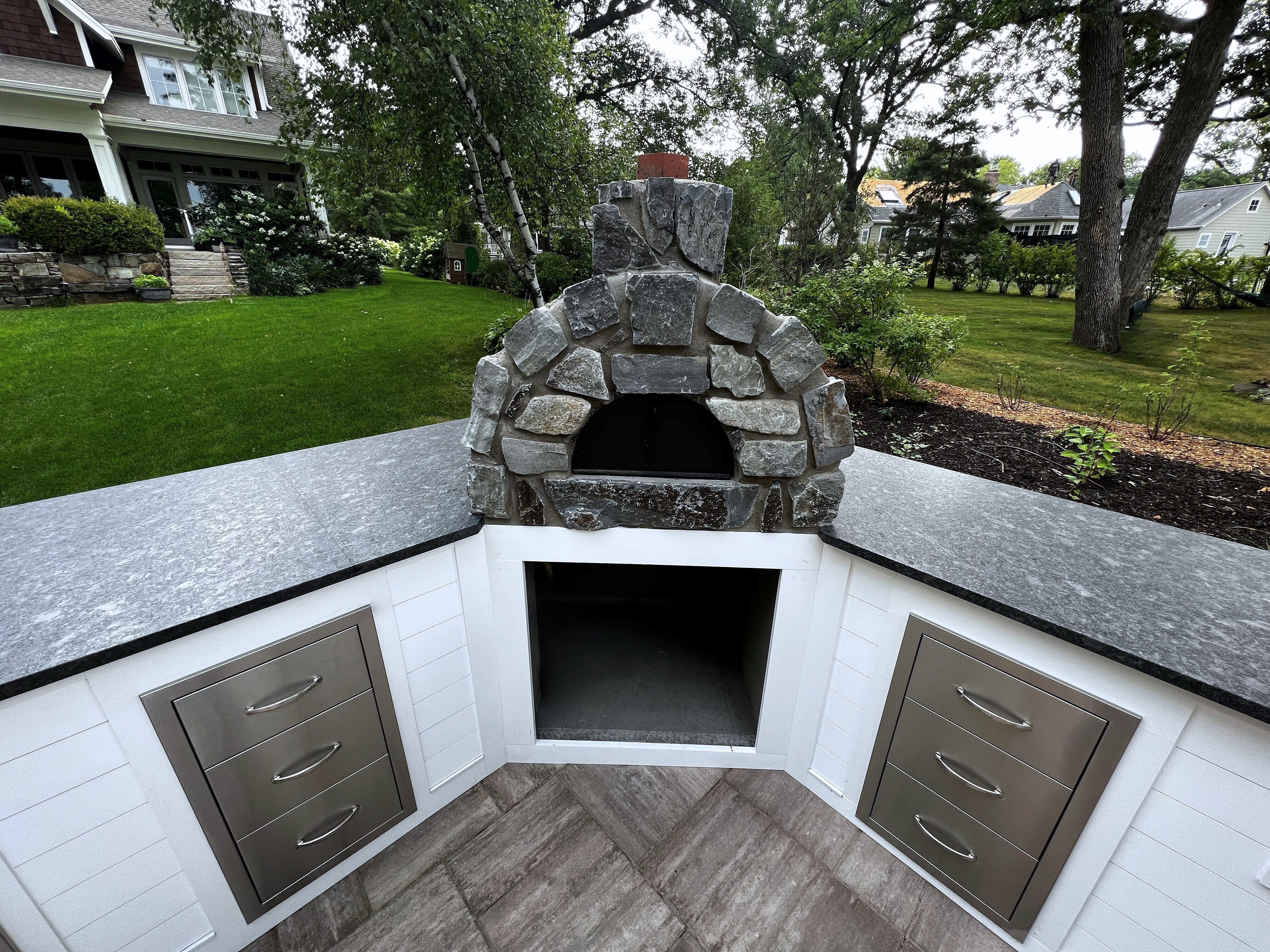
Whether you're hosting a neighborhood barbecue, preparing dinner for the family, or spending the afternoon by the pool, a well-designed [outdoor kitchen](https://outdoorinnovations.com/outdoor-kitchen) layout makes cooking, serving, and socializing happen naturally. The best setups out here aren't built around a wish list of appliances — they're built around how people actually move through the yard.
Grilling season doesn't last long in this state, so if you're planning a build for your backyard, getting the layout, budget, and materials right from the start makes a real difference. Here's what that looks like, from zoning the space to picking materials that'll actually survive a Minnesota winter.
## What Is the Best Outdoor Kitchen Layout?
The best layouts create distinct zones for cooking, prep, serving, and dining while keeping everything connected.
When thinking about the features you want in your space, think about how people actually move through your yard. Someone manning the grill shouldn't block the path to the pool. Guests should be able to grab a drink or refill a plate without cutting through the cook's space.
Most builds break down into four zones:
- **Cooking zone** — grill, side burner, and any built-in smoker or pizza oven
- **Prep zone** — counter space, a sink, and cutting surfaces close to the grill
- **Serving or bar zone** — refrigeration and storage so guests aren't crowding the cook
- **Dining or gathering zone** — seating far enough from the smoke and heat to stay comfortable
Where these zones should be placed depends on your backyard, the features you want, and how you’ll use the space. An [experienced landscaper](https://outdoorinnovations.com/blog/tips-for-choosing-the-right-landscaping-company) like Outdoor Innovations Landscaping can help create the perfect, customized layout for your unique home.
→ [Explore backyard makeover options and get a personalized recommendation](https://outdoorinnovations.com/contact-us)
## Where Should an Outdoor Kitchen Go?
Placement affects how often you'll actually use what you built. A lot of homeowners in Minnesota choose to put their outdoor kitchen near the pool or patio, so cooking, dining, and relaxing all flow together.
You'll also want to think about wind direction, afternoon sun, smoke from the grill, and how people will move between seating areas. The goal is to create a layout that encourages conversation instead of forcing everyone to gather around the grill.
The right location creates convenience and connection without making the space feel crowded.
Related Content:[How to Design an Outdoor Kitchen That Works With Your Pool](https://outdoorinnovations.com/blog/building-an-outdoor-kitchen-by-your-pool-what-to-know)
## What Should Every Outdoor Kitchen Include?
The features that matter most depend on how you cook and entertain, but we see a few essentials show up in almost every build:
- Cooking appliances like grills, side burners, pizza ovens, or rotisserie spits
- Dedicated prep space gives you room to work
- Weather-resistant, insulated storage keeps cooking tools protected and within reach.
- A built-in trash or recycling cabinet to make cleanup easier
- Refrigeration so drinks and ingredients stay cool
- Task lighting over the cooking area, as well as across the patio
Good lighting is another feature that's easy to overlook. Task lighting around the cooking area and softer ambient lighting throughout the space help extend the usability of your outdoor kitchen well into the evening.
Related Content: [7 Outdoor Kitchen Ideas for Grillers](https://outdoorinnovations.com/blog/7-outdoor-kitchen-ideas-for-grillers)
## How Much Does a Typical Minnesota Outdoor Kitchen Cost?
Cost is usually the first real question, and it comes down to scope. A simple build, a single grill island with a small prep counter, sits at the low end. Add a side burner, a built-in fridge, and a stone or quartz countertop, and you're into mid-range territory. Go all-in with a full appliance suite, a sink, and a covered structure, and you're at the premium end.
One thing that's easy to miss when budgeting here: frost-rated materials and winterizing (shutting off and draining water lines before the first hard freeze) add both cost and an extra line item to your fall checklist that warmer climates simply don't deal with. We're happy to [walk you through real project numbers](https://outdoorinnovations.com/contact-us)before you commit to a layout.
## What Should Minnesota Homeowners, Specifically, Plan For?
Between humid summers and winters where the ground freezes hard, this is a demanding climate for anything left outside year-round. That swing means storage and cleanup solutions need real thought, not a copy-paste from a mild-climate spec sheet.
- Choose 304-grade stainless steel or similarly rated appliances rather than standard indoor-grade units
- Use sealed natural stone or frost-rated engineered material for countertops so they don't crack under freeze-thaw cycles
- Pick cabinetry and finishes actually graded for our climate's temperature swings (not just labeled “weather-resistant”)
- Add a faucet sprayer for quick spot cleaning and hidden trash storage to keep pests out
- Plan for water line shutoff and drainage before winter to avoid freeze damage to plumbing
- Consider a cover, pergola, or retractable awning to protect appliances from snow load and ice
Our [design and build team](https://outdoorinnovations.com/about-us) can help you land on a materials list that actually holds up here, instead of one built for a climate that never sees a hard freeze.
## Why Landscape Design Matters
An outdoor kitchen should feel like a natural part of your backyard, not a separate project.
Planning it alongside your patio, pool, walkways, and seating areas means utilities, lighting, drainage, and materials all get coordinated from day one. What you end up with looks better and holds up longer.
### Finding the Right Builder
If you're searching for an outdoor kitchen contractor near you, look for a team that's actually built for cold-climate conditions, not just general landscaping experience. We design and build custom outdoor kitchens across the Twin Cities metro — Hugo, Woodbury, Minnetonka, Edina, Stillwater, and everywhere in between — with materials and layouts made to handle freeze-thaw cycles from day one.
[Get a Quote](https://outdoorinnovations.com/request-quote)
---
## Quick Questions We Hear a Lot
### What's the best layout for a smaller backyard?
A single-line or L-shaped grill island works well for tighter spaces — it combines a grill, prep counter, and storage in a compact footprint without crowding the rest of the yard. Explore options with our blog: [Small Yard, Big Impact: Design Strategies That Maximize Usable Space](https://outdoorinnovations.com/blog/small-yard-big-impact-design-strategies-that-maximize-usable-space)
### What is the average cost of an outdoor kitchen build in Minnesota?
Cost ranges from a basic single-grill setup at the low end to a fully custom kitchen with a full appliance suite and covered structure at the top. Frost-rated materials and winterizing needs tend to add to the budget compared to warmer climates. Expect an investment on par with remodeling an area in your home.
### Does the kitchen need to be covered?
Not required, but we strongly recommend it. A [pergola, pavilion,](https://outdoorinnovations.com/pergolas-gazebos) or other outdoor structure extends the life of your appliances, protects against snow load, and keeps the space usable in more weather throughout the year.
### What materials actually hold up to our winters?
304-grade stainless steel, sealed natural stone, and frost-rated engineered countertop materials perform best against freeze-thaw cycles and big temperature swings.
---
Outdoor Innovations Landscaping creates exquisite backyards for homeowners in Minnesota. We design and build custom in-ground pools, outdoor kitchens, and outdoor living rooms across the Twin Cities metro — Hugo, Woodbury, Minnetonka, Edina, Stillwater, and everywhere in between.[Explore our past projects](https://outdoorinnovations.com/gallery) and[get a quote online](https://outdoorinnovations.com/request-quote) to make your dream backyard a reality.
## Related Articles
[ The Secret to Integrating Tech Into Your Outdoor Pool Area 07/28/2026](https://outdoorinnovations.com/blog/outdoor-pool-tech)
[.jpg?width=500&height=500&name=view%20of%20a%20bar%20area%20in%20outdoor%20kitchen%20(1).jpg) How to Design an Outdoor Kitchen That Works With Your Pool 05/11/2026](https://outdoorinnovations.com/blog/building-an-outdoor-kitchen-by-your-pool-what-to-know)
[ Smart Backyard Design Ideas for Making Small Yards Feel Bigger 04/27/2026](https://outdoorinnovations.com/blog/small-yard-big-impact-design-strategies-that-maximize-usable-space)
[](https://outdoorinnovations.com)
- [Contact Us](https://outdoorinnovations.com/contact-us)
- [Careers](https://outdoorinnovations.com/careers)
- Additional Services
- [Pavers](https://outdoorinnovations.com/pavers)
- [Retaining Walls](https://outdoorinnovations.com/retaining-walls)
- [Septic Systems Management](https://outdoorinnovations.com/septic-systems-management)
2026 Outdoor Innovations Landscaping© | All rights reserved | [Privacy Policy](http://47141334.hs-sites.com/privacy-policy) | Minneapolis Web Design by BizzyWeb
[](https://www.houzz.com/professionals/landscape-contractors/outdoor-innovations-landscaping-pfvwus-pf~2081419529?)
-
-
-
```json
{
"@context" : "https://schema.org",
"@type" : "BlogPosting",
"author" : {
"@type" : "Person",
"name" : "Outdoor Innovations",
"url" : "https://outdoorinnovations.com/blog/author/outdoor-innovations"
},
"dateModified" : "2026-07-28T20:43:54.995Z",
"datePublished" : "2026-07-28T20:43:39.000Z",
"headline" : "How to Get the Most Out of Your Outdoor Kitchen in Minnesota",
"image" : [ "https://outdoorinnovations.com/hubfs/Website/Outdoor%20Kitchens%20and%20Livingrooms/baebff75016e4fcdbc2d440dab08044f.jpg" ],
"mainEntityOfPage" : {
"@id" : "https://outdoorinnovations.com/blog/how-to-get-the-most-out-of-your-minnesota-outdoor-kitchen",
"@type" : "WebPage"
},
"publisher" : {
"@type" : "Organization",
"logo" : {
"@type" : "ImageObject",
"url" : "https://outdoorinnovations.com/hubfs/Website/2026-Logos/OutdoorInnovations_2026_VectorAssets.png"
}
}
}
```