Smart Backyard Design Ideas for Making Small Yards Feel Bigger
Can AI Design Your Backyard? What Works and What Doesn’t
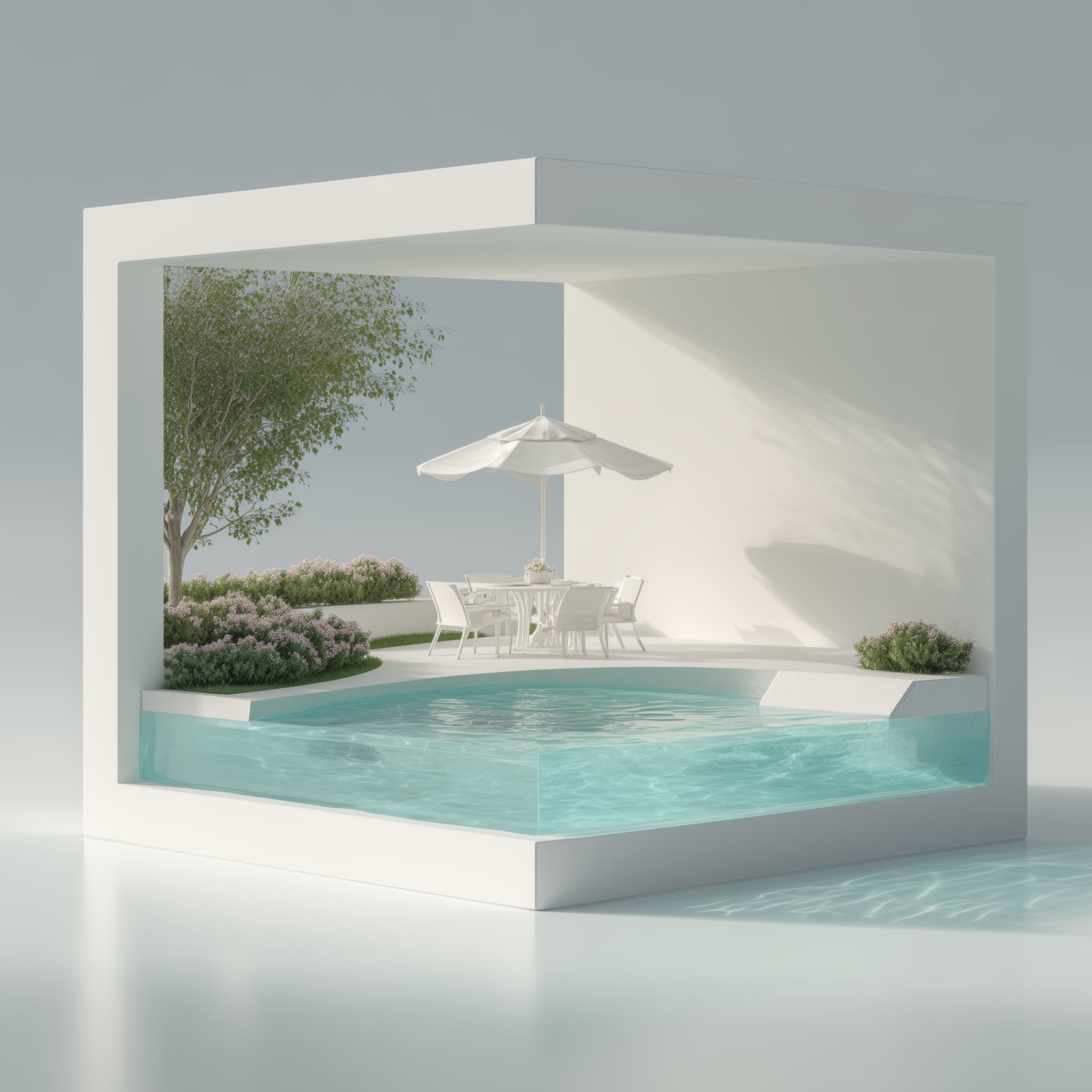
Scroll through social media for five minutes and you’ll see it: AI is everywhere. So it hasn’t been that much of a surprise that we’re seeing homeowners turn to AI tools to transform their backyard in seconds.
AI is changing how people explore ideas. It’s lowering the barrier to creativity. It’s helping homeowners visualize possibilities faster than ever before.
But here’s the part that matters: AI’s goal is to give you what you want to see. Not what can actually be built.
We’re getting more and more clients exploring their options within AI and wanting that to be executed. If you’re using AI to explore your backyard options, it’s important to know how it can help you – and where it could actually hurt.
Related Content: Backyard Design: How to Use Fun Interior Design Trends Outside
What AI Can Help With
1. Early Concept Ideas
AI is excellent at generating broad ideas. Want to see what your yard might look like with a pool? Curious about a pergola near the back fence? Wondering how a fire feature might anchor the space?
AI can generate quick visual concepts that spark imagination. For early visualization, it’s not necessarily important to worry about what’s possible. You might just want to explore what something looks like.
2. Visual Comparisons
AI can be useful for side-by-side comparisons. Some examples include:
- Comparing different pool locations and features
- Comparing dark pavers vs. light pavers
- Exploring garden placement
You can experiment without committing to materials or construction. It’s a fast way to refine your taste before investing in a full design process.
3. Clarifying Preferences Before Meeting a Designer
Bringing AI-generated inspiration to a design meeting can open a conversation.
Instead of vague language like “I want something cozy,” you can show what cozy looks like to you.
Just remember: even if it’s a photo of your own yard that AI has altered, it’s still just concept art. It’s no different than pointing to a magazine photo and saying, “I want this exactly, but in my yard.” A designer can get as close as possible to your vision, but there’s also practical considerations that may get in the way. A responsible designer will let you know when certain choices may negatively impact the overall look, ongoing maintenance, or usability.
How to Use AI the Smart Way
If you want to experiment with AI backyard design, here’s how to approach it productively:
- Use it to explore styles and layouts, not structural specifics.
- Focus on identifying what you’re drawn to, not copying exact details.
- Bring your AI images to your designer as inspiration, not instruction.
Think of AI as a brainstorming partner. When you combine digital inspiration with real-world expertise, that’s where the magic happens.
Where AI Falls Short
AI can show you a quick concept, fast. But AI doesn’t not understand:
- Soil conditions in your backyard
- Drainage requirements
- Grading and elevation changes
- Local building codes
- What plants can and can’t live in your eco system
- Structural load
- Locations for utilities
- Budget constraints
- Fire hazards and electrical risks
- General physics
It understands patterns in images and what you want to see.
AI might suggest a retaining wall where there’s no structural support. It might flatten elevated land to place a pool. It might generate materials that don’t even exist or surfaces that would become dangerously slippery around water. It will happily design a backyard that looks stunning but cannot be built.
That’s not a flaw: that’s just how these tools work. Their job is to produce a convincing and cool image. Not to engineer a functioning outdoor space.
The Gap Between Inspiration and Construction
The biggest misconception homeowners run into is assuming that because something looks realistic, it must be realistic.
But real landscapes are constrained by physics, elevation, access, water management, and long-term durability.
For example:
- That perfectly flat pool deck may not be realistically possible in the middle of a hill
- A fire pit under a canopy and too close to a garden bed poses a fire risk
- Marbled outdoor countertops look stunning, but are extremely costly and prone to damage
None of those things show up in an AI rendering. That’s where professional design makes the difference. A designer doesn’t just ask, “Does this look good?” They ask, “Will this do what it needs to, stay within budget, and look good?”
AI Is Changing Landscape Design. But It’s Not Replacing It.
AI is absolutely going to shape the future of landscape design. Homeowners are becoming more visually informed before they ever schedule a consultation.
That’s a good thing! Having inspiration and being able to show examples of what you want leads to a better collaborative process.
But a backyard is not a blank canvas. It’s a physical environment with engineering realities, safety standards, and long-term performance considerations.
The best results will always come from blending inspiration with expertise.
If you’ve been experimenting with AI concepts for your backyard, bring them to the table. We’ll help you separate what’s possible, what needs adjustment, and what could become something even better.
Because great outdoor spaces don’t just look impressive on a screen: they work beautifully in real life.
Outdoor Innovations Landscaping creates exquisite backyards for homeowners in Minnesota. From in-ground pools to luxurious paver patios to outdoor living rooms, we do it all. Explore our past projects and get a quote online to make your dream backyard a reality.